Publication Summary
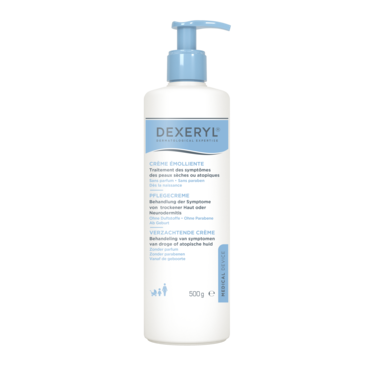
Evaluation of a Novel Skin Emollient Cream on Skin Lipidome and Lipid Organization
Objective
Evaluate the effect of a glycerol/petrolatum-based emollient (G/P-emollient) cream on the lipid profiles of the stratum corneum (SC) and its potential impact on skin barrier function.
Study
Ex vivo and in vitro study using isolated human SC and a reconstructed human epidermis (RHE) model.
Lipid organization was analyzed using X-ray diffraction (SAXS and WAXS), and shotgun lipidomics analysis was performed to quantify ceramide (CER) classes and chain lengths.
Outcome Measures
- SC lipid organization analyzed by X-ray diffraction.
- Changes in inter-bilayer lipid distances and crystalline lattice type.
- Quantification of CER classes and their chain lengths using lipidomics.
- Changes in specific CER ratios (NP/NS and AP/AS) involved in inflammatory skin conditions.
Results
The cream exhibited a lipid organization similar to that of the SC (orthorhombic and hexagonal lattices).
It penetrated deep SC layers without altering its lamellar structure.
Increased long-chain CERs (>42 carbons) and decreased short-chain CERs (<42 carbons).
Increased acyl-CER classes (CER EOS, EOH, EOP, EOdS) and CER NP, which is reduced in dry skin.
Changes in NP/NS and AP/AS ratios, suggesting a beneficial effect on lipid imbalances observed in inflammatory conditions such as atopic dermatitis.
Conclusion
The G/P-emollient cream favorably modifies SC lipids, balances CER levels and ratios, and potentially improves skin barrier function, which may be beneficial in inflammatory skin conditions such as atopic dermatitis.
Our other publications on this subject
Want to read on?
This access is reserved for professionals, registered on Pierre Fabre For Med.
To access the full content, please register or log in if you already have an account.